

Reveal hidden infection transmission within 24 hours—
so your team can act sooner
NGD combines automated sample preparation, sequencing and genomic analysis to deliver actionable transmission results within 24 hours of bacterial colonies being loaded into the NGD200—helping your team act faster, stop more outbreaks and protect more patients.

From bacterial colonies loaded into the NGD200 to actionable transmission results.

48 samples per run
Automated, high-throughput preparation for routine genomic surveillance.

24 hours
Actionable insight
Clear transmission findings to support faster, more confident decisions.
Most infection transmission goes undetected — until it’s too late
90%
of in-hospital transmission goes undetected
Healthcare-associated infections remain one of the most persistent and costly risks facing hospitals, and the clinical stakes are rising. Antimicrobial-resistant pathogens are increasing rapidly in U.S. hospitals, highlighted by the CDC’s recent report of a more than 460% increase since 2019 in infections involving deadly bacteria carrying the NDM resistance gene (1).
Despite the dedication of Infection Prevention teams, traditional methods rely heavily on manual chart reviews, delayed laboratory confirmation and assumptions rather than definitive evidence. Without real-time sequencing, transmission remains largely invisible—and an estimated 90% of in-hospital transmission goes undetected (2–4).
At the same time, many suspected outbreaks lead to resource-intensive investigations that ultimately prove unnecessary. When isolates are sequenced, fewer than 10% of suspected outbreaks are found to be genetically linked (3).
By the time a genuine cluster is identified, patients may already have been exposed, costs have escalated and staff resources are strained. The result is undetected transmission, unnecessary investigations and preventable HAIs—contributing to longer hospital stays, capacity pressures, regulatory penalties, reputational risk and patient harm.
NGD Infection Prevention makes transmission tracking cost-effective and operationally practical. By combining automated sample preparation, real-time sequencing and immediate bioinformatic analysis, the NGD system gives Infection Prevention teams the evidence they need to identify transmission early, focus resources effectively and intervene before further patients are affected.
-
1 CDC report finds sharp rise in dangerous drug-resistant bacteria: NDM-CRE infections increased >460% in the United States, 2019–2023. Centers for Disease Control and Prevention (CDC), September, 2025.
2 Longitudinal genomic surveillance of MRSA in the UK reveals transmission patterns in hospitals and the community. Coll et al., Sci Transl Med, 2017.
3 Whole-Genome Sequencing Surveillance and Machine Learning of the Electronic Health Record for Enhanced Healthcare Outbreak Detection. Sundermann, et al. Clinical Infectious Diseases, 2022.
4 Clinical Implementation of Routine Whole-Genome Sequencing for Hospital Infection Control of Multi-drug Resistant Pathogens. Harris, et al. Clinical Infectious Diseases, 2023.
How our system can benefit your hospital
Hospital-acquired infections are costly—and often preventable. By enabling earlier, evidence-based detection of transmission, NGD helps hospitals identify outbreaks sooner, target interventions more effectively and avoid wasting resources on false alarms.
Potential ROI
>20:1
Modeled health-system analyses show potential ROI greater than 20:1 when applied at operational surveillance scale.
-
For financial modeling, we apply a conservative 20– 25% reduction in transmission-related infections, materially below reductions observed in best-in-class programs, recognizing that impact depends on baseline rates and operational execution.
-
Preventing transmission-related infections can avoid hundreds or even thousands of inpatient bed-days each year, helping to reduce average length of stay, release valuable capacity and improve the patient experience.
-
Proactive genomic evidence strengthens documentation, supports defensible reporting and may reduce exposure to costs and penalties associated with hospital-acquired conditions.
Healthcare-associated infections can cost hospitals an estimated $25,000–$50,000 per case. Preventing just five infections per year could represent approximately $125,000–$250,000 in avoided costs, alongside reduced excess length of stay, isolation, treatment and downstream complication costs.
-
Genomic confirmation helps distinguish genuine transmission from unrelated cases, reducing unnecessary investigations, isolation measures and manual contact tracing. This allows Infection Prevention teams to spend less time retrospectively disproving suspected outbreaks and more time intervening when active transmission is detected.
THE SOLUTION
An integrated infection intelligence system
The NGD platform combines automated sequencing and advanced analytics to give your team direct evidence of transmission — in ~24 hours. Unlike traditional tools, NGD doesn’t rely on rules or retrospective data. It delivers genomic certainty so your team can act immediately.

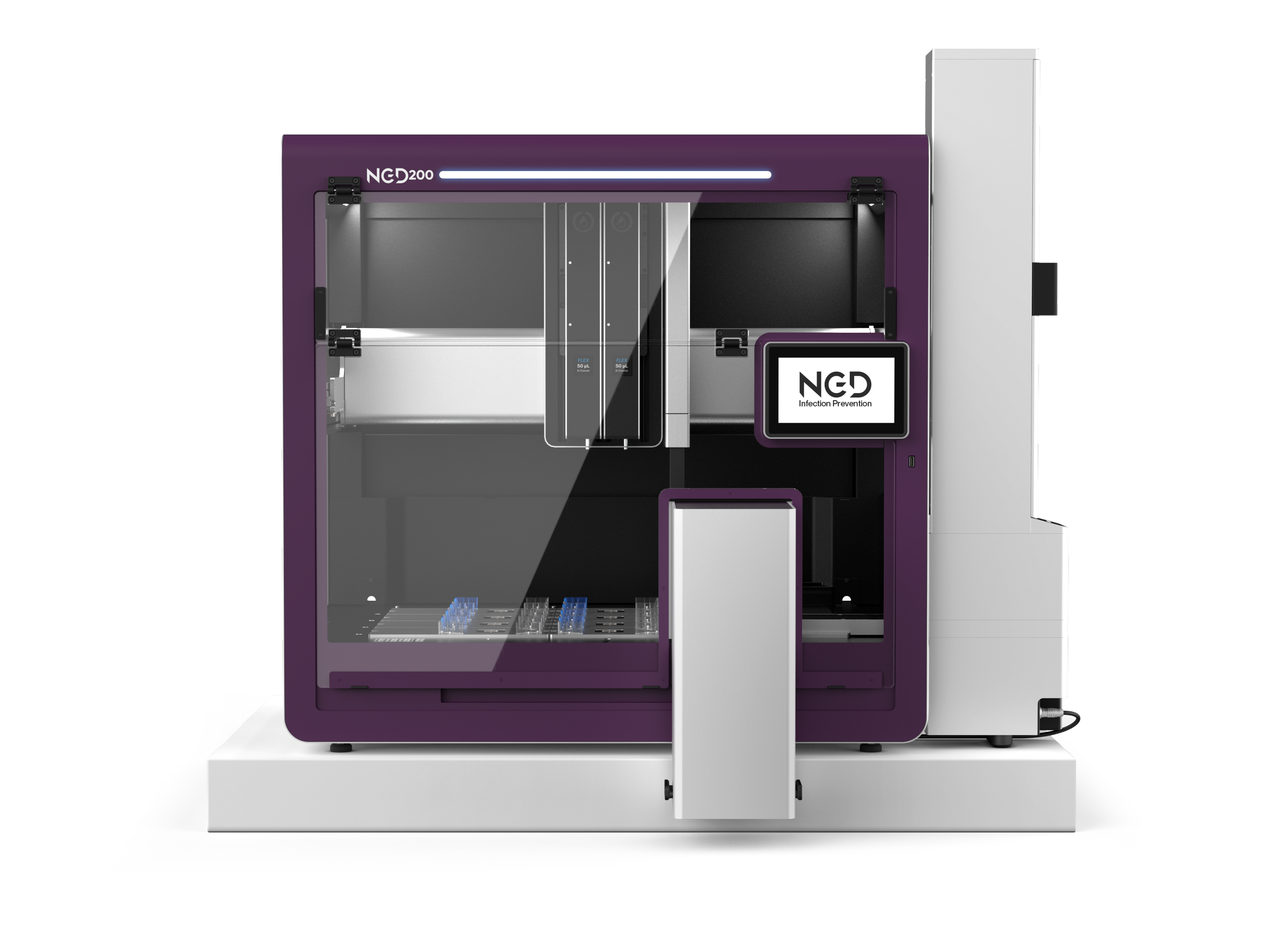
PREPARE
Automated sample preparation with the NGD200
In approximately four hours, the NGD200 prepares up to 48 barcoded samples ready to be loaded onto the sequencer.
Automating DNA extraction, purification, library preparation and pooling makes routine in-hospital genomic surveillance operationally achievable.

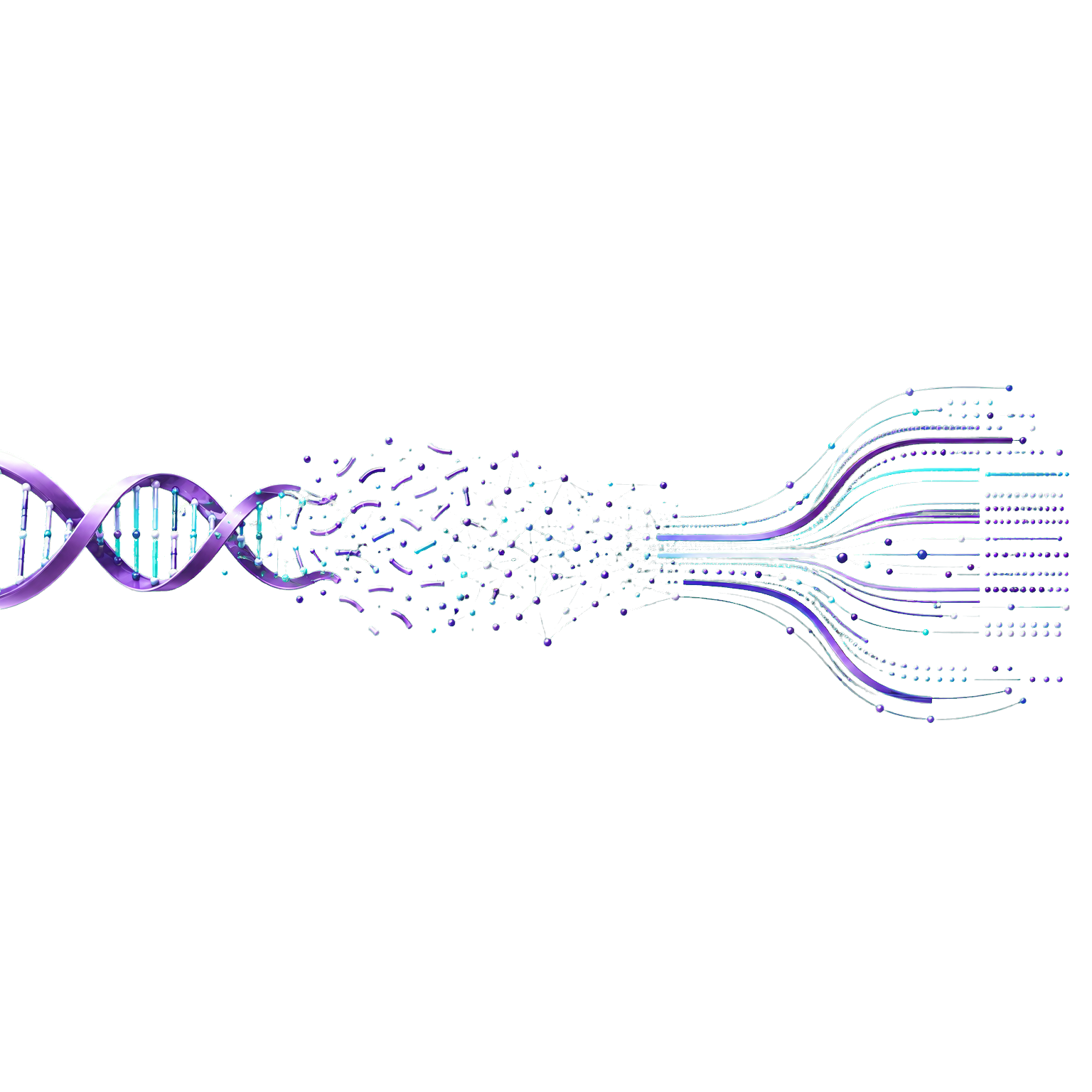

ANALYZE
Automated, validated genomic analysis
Following sequencing, NGD automatically compares each bacterial genome with current and previously sequenced samples to identify potential transmission links.
Transmission findings are generated as part of the complete 24-hour colony-to-result workflow, supporting earlier investigation and intervention.
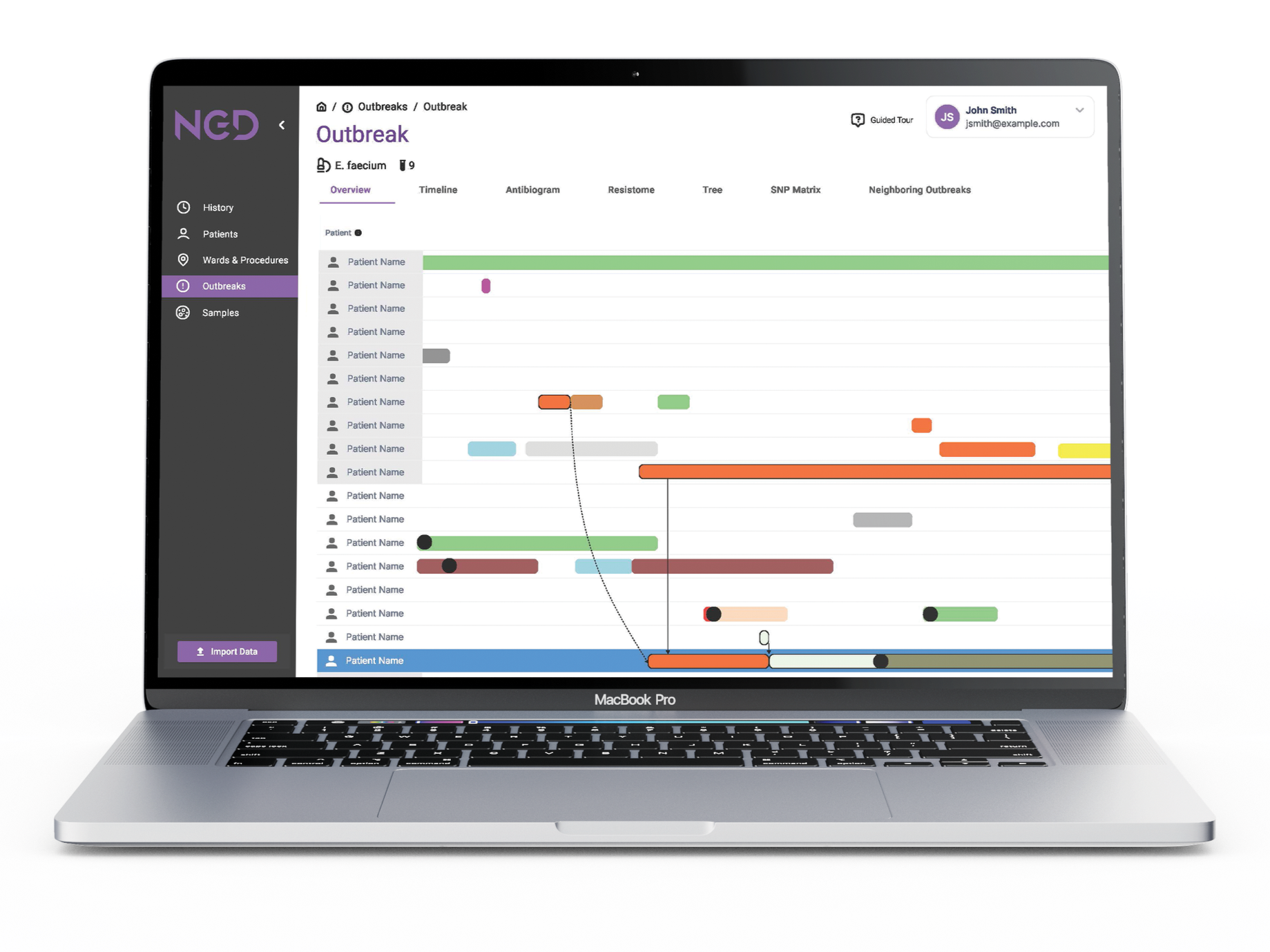

ACT
Actionable infection intelligence with NGD EpiAssist
As new transmission results become available, NGD EpiAssist provides an up-to-date view of how infections are spreading within your hospital.
Genomic findings are combined with epidemiological context, helping Infection Prevention teams investigate potential transmission routes and coordinate targeted interventions.
FROM INSIGHT TO INTERVENTION
Built for Infection Prevention teams
NGD gives Infection Prevention teams clear, actionable evidence—helping them identify transmission, prioritise interventions and demonstrate their impact.

Pinpoint transmission routes with confidence
See who infected whom and how.

Reduce infections and protect more lives
Act earlier to stop transmission.
Build a stronger case for resources
Data-driven impact that leadership trusts.

Work as a high-performing infection prevention team
Clear, visual insights everyone can understand.
Receive actionable transmission findings within 24 hours, helping your team investigate and intervene sooner.
Make informed decisions sooner

Your team gets answers—not more data to interpret.
BUILT FOR REAL-WORLD HOSPITAL WORKFLOWS
Designed to fit your hospital—not disrupt it
NGD works alongside your existing microbiology and Infection Prevention workflows, with the equipment, software, training and support needed to introduce genomic surveillance into routine hospital practice.

Works alongside existing workflows
Add genomic surveillance without replacing your existing microbiology, Infection Prevention or surveillance systems.

Straightforward for hospital teams to operate
Automated sample preparation and minimal hands-on time make routine operation manageable for existing laboratory teams.

No specialist bioinformatics expertise required
NGD automates genomic analysis and presents transmission findings through a clear interface designed for Infection Prevention teams.

Secure, on-premises software deployment
NGD EpiAssist is installed within your hospital environment, helping sensitive information remain under your organisation’s control.

Scales across your organization
Start within a single hospital and expand genomic surveillance across multiple facilities or an entire integrated delivery network.
From evaluation and onboarding to training and ongoing support, our team guides you through every stage of implementation.
WHY GENOMIC SURVEILLANCE?
Traditional surveillance can identify potential concerns, but genomic evidence is needed to determine whether infections are genuinely related.
Because assumptions aren’t enough
Traditional Surveillance Alone
Flags potential issues based on predefined rules
Requires manual investigation and validation
Cannot confirm whether transmission has occurred
NGD Enhanced Genomic Surveillance

Provides direct genetic evidence of related infections
Delivers high-confidence evidence for decision-making
Enables faster, more targeted interventions
Move from suspected outbreaks to confirmed transmission.
Clinical Evidence
32%
Genomic sequencing revealed that 32% of NICU patients were part of hidden S. aureus transmission clusters missed by conventional surveillance, highlighting how standard screening can underestimate hidden hospital spread.
Whole Genome Sequencing Enabled Identification of Undetected Putative Infection Transmission in a NICU. David C. Gaston et al, ASM Microbe Abstract 2024.
90%
Nearly 90% of VRE acquisitions were detected through colonization, highlighting hidden transmission missed by routine surveillance. Transmission often occurs through colonized carriers before infection develops - making it invisible to traditional infection-based surveillance.
Genomic sequencing surveillance of patients colonized with vancomycin-resistant Enterococcus (VRE) improves detection of hospital-associated transmission. Alexander J. Sundermann, et. al, BMC Global Public Health, 2025.
1/3
In a three-year NICU genomic surveillance study at CHOP, one-third of NICU S. aureus colonization events resulted from patient-to-patient transmission. 34% of bloodstream infections were attributable to transmission, underscoring the limits of passive surveillance.
Rapid Dissemination of Staphylococcus aureus in the Neonatal Intensive Care Unit is Associated with Invasive Infection. Qianxuan She et al, Nature, 2026.
MRSA
Automated genomic analysis identified MRSA transmission clusters missed by standard infection surveillance. It demonstrated that real-time genomic surveillance can be operationalized without extensive bioinformatics expertise.
Pilot Evaluation of a Fully Automated Bioinformatics System for Analysis of Methicillin-Resistant Staphylococcus aureus Genomes and Detection of Outbreaks. Nicholas M. Brown et al, Journal of Clinical Microbiology, October, 2019.
See how NGD could deliver actionable transmission insight within 24 hours for your hospital.
Discuss your current microbiology workflow, surveillance priorities and implementation options with our team.